Glassblowing injuries are almost never the result of a single dramatic mistake. They come from a room laid out badly, a habit that seemed harmless for a year, and a moment of fatigue. This article is about the room and the habits, because those are the things that actually decide whether you get hurt.
Heat and burns
The furnace, glory hole and every hot pipe in the shop are burn hazards. The dangerous ones are not the glowing objects, which everyone respects, but the ones that look cool: a pipe set down five minutes ago, the furnace shell, the kiln door face.
- Assume every surface within two metres of the furnace is hot.
- Wear natural fibres. Synthetics melt onto skin and turn a small burn into a serious one.
- Use a heat shield on the pipe to cut the radiant load on the back of your hand.
- Rack hot pipes rather than setting them on a bench, where they roll.
- Announce a hot pipe out loud when you set it down near another person.
Molten glass sticks while it burns and cannot be shaken off. Cool the area under running water for at least twenty minutes and seek medical attention for anything larger than a small area.
Fumes and ventilation
A hot shop produces carbon monoxide from gas combustion, nitrogen oxides, and fine metal oxide particulate from coloured glass and frit. All of it rises and all of it is a respiratory hazard. Capture velocity at the hood face is the number that matters: below roughly 0.5 m per second the plume escapes around the edges.
| Hazard | Source | Control |
|---|---|---|
| Carbon monoxide | Gas-fired furnace and glory hole | Extraction plus a CO alarm in the room |
| Metal oxide fume | Coloured glass and frit | Hood capture at source, respirator for powder work |
| Silica dust | Coldworking and grinding | Wet grinding only, never dry |
| Gold and fine leaf | Gilding | Work in still air, avoid drafts |
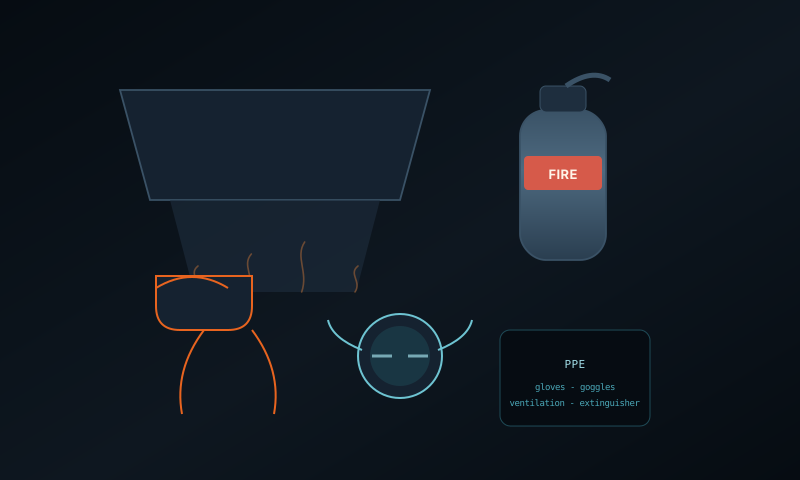
A hood that starves the room pulls combustion gases back down the flue. Balance the make-up air so the room stays slightly negative without reversing the flue.
Fire load and the room
A hot shop is a room with an open flame, very hot surfaces and often wood or paper within reach. Fire prevention is mostly about layout: keep combustibles out of the working radius, keep the extinguisher at the exit rather than across the room, and keep the floor clear of hot offcuts.
- Store paper, newspaper pads and wooden blocks away from the furnace, not on the marver.
- Keep a fire blanket within arm reach of the bench.
- Use an appropriate extinguisher type for gas and electrical fires.
- Never cut hot glass over a floor area you have not cleared.
PPE that actually gets worn
Protective equipment only works if it is comfortable enough to keep on. Choose gear you can tolerate for a full session, then replace it when it degrades.
| Item | Why | Replace when |
|---|---|---|
| Eye protection | Glass chips, slurry spray, infrared exposure | Scratched or fogging |
| Heat-resistant gloves | Handling hot pipes and work | Charred or stiff |
| Fitted respirator | Powder, oxide and frit dust | Per manufacturer interval |
| Natural fibre clothing | Does not melt onto skin | Torn or oil-stained |
| Face shield | Grinding and wheel work | Cracked or cloudy |
A studio safety routine
Before the session
Clear the floor, check the extinguisher, confirm extraction is running and the CO alarm is live.
During the session
Rotate tasks so you are not standing at the furnace for hours. Fatigue causes most late-session accidents.
At the end
Rack all hot pipes, close the furnace port, post a cooling notice on the kiln.
Monthly
Test extraction with a smoke pencil, test the CO alarm, inspect gloves and eye protection.
None of this is exotic. It is a room designed so that the safe action is also the easy action, and habits repeated until they are automatic.
This article is educational reference material. Hot glass work involves severe burn, fume and fire hazards. Wear eye protection, heat-resistant gloves and natural-fibre clothing, ventilate every heat source to open air, fit a carbon monoxide alarm, and take hands-on instruction before operating any hot glass equipment.
No guarantee of results. Techniques, temperatures and schedules described here are reference guidance based on common studio practice. Glass behaviour depends on your materials, equipment and technique. Test everything on your own setup and follow the manufacturer's instructions.