Furnace & Heating
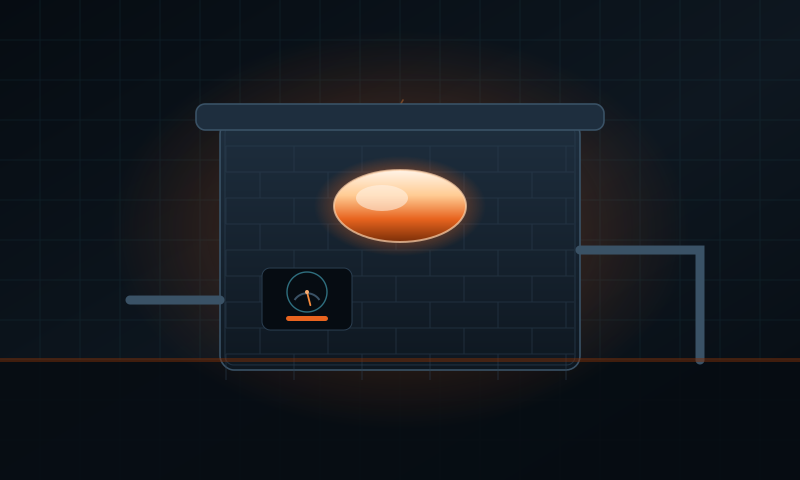
The furnace side of the studio: melting tanks, crucibles, reheating ports and the ventilation that keeps the room breathable.
6 tools
Twenty-eight tools across furnace work, gathering, shaping, colour and annealing, with real specifications and the safety notes that matter.
Four interactive simulators let you gather glass, shape it, colour it and anneal it, with live estimates for volume, wall thickness and cooling time.
Colour that does not share a coefficient of expansion with the base glass will crack the piece weeks later. Check compatibility first.
We are not a supplier. Every specification here is reference material compiled for learning, with no products to sell.
Heat, fumes, silica dust and ventilation are covered on every relevant page, not buried in a disclaimer.
Gather and blow, shape, colour and anneal in an interactive simulation. No account, no download, runs in the browser.
Glass is a material with a mind of its own. Nothing here promises a result, and every schedule needs testing on your own setup.
From the melting furnace to a diamond file, each tool is documented with real specifications, compatible glass types, and the safety notes that actually matter at the bench.
The furnace side of the studio: melting tanks, crucibles, reheating ports and the ventilation that keeps the room breathable.
Pipes, rods, hoses and the pads that turn a glowing gather into a hollow bubble.
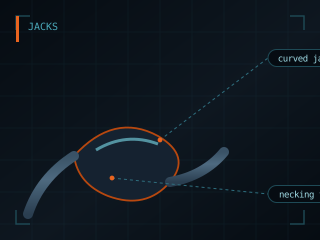
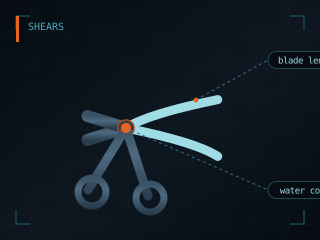
Hand tools for the working window: tweezers, shears, pliers, jacks and paddles.
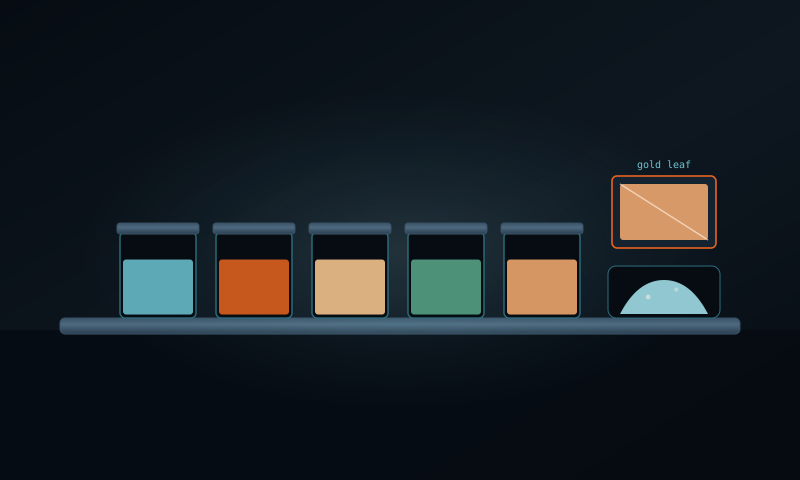
Colouring materials and the surface treatments applied while the glass is still hot.
Controlled cooling schedules and the coldworking tools that finish a piece after it has cooled.
Four stages, each with its own tools and its own failure modes. Get the order wrong and the piece cracks.
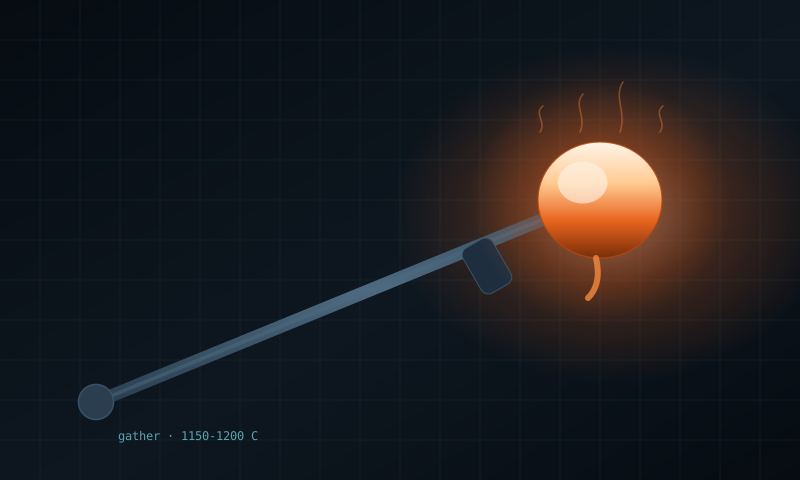
A blowpipe enters the furnace and picks up molten glass at around 1150 °C. The gather sets the size of everything that follows.
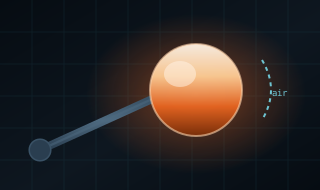
Air inflates the gather from inside while rotation keeps it round. Jacks, pliers and paddles move the form while it is still soft.
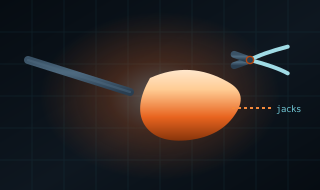
Frit, powder, oxide and gold leaf are applied to hot glass. Every colourant must match the expansion of the base glass.
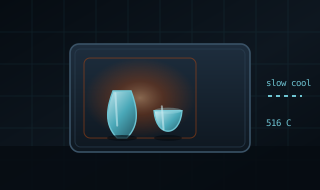
The piece is held above its annealing point, then cooled slowly through the strain point. Skip this and it cracks days later.
Four interactive simulations with live estimates. They run entirely in your browser, load only when you open them, and fall back to 2D diagrams if WebGL is unavailable.
This preview is drawn with animation rather than a 3D library, so the home page stays light. The full simulators add real geometry, deformation and a draggable annealing curve.
3D tools are educational simulations. Real glassblowing requires hands-on instruction and the equipment manufacturer's safety instructions.
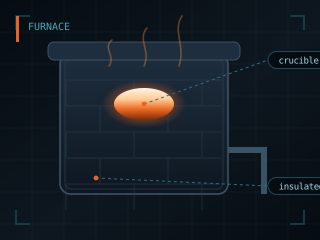
The melting tank that holds glass at working temperature, day and night, for the whole life of the studio.
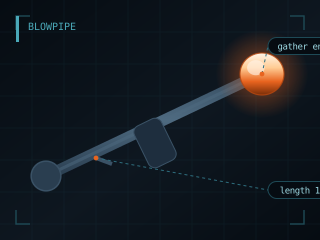
The hollow steel tube you gather on, rotate and blow through. The primary instrument of the hot shop.
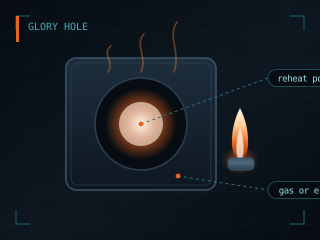
A reheating chamber that brings a cooling piece back to working temperature without touching the main furnace.
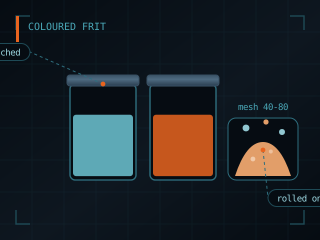
Crushed coloured glass graded by mesh size, rolled onto a hot gather for speckled colour.
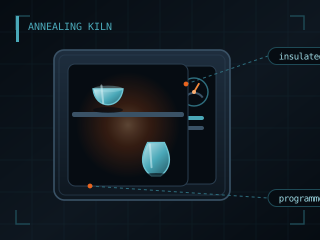
A small top-loading kiln used for beads, small sculpture and single-piece annealing.
Batch proportions, an annealing schedule, and whether two glasses can actually be combined.
Work out raw material weights for a soda-lime, borosilicate or lead crystal batch, with an estimated melting temperature and refining note.
Turn a glass type, a thickness and an oven load into a full ramp, soak and cool schedule with a timeline.
Check whether two glasses can be fused or mixed safely by comparing their coefficients of expansion.
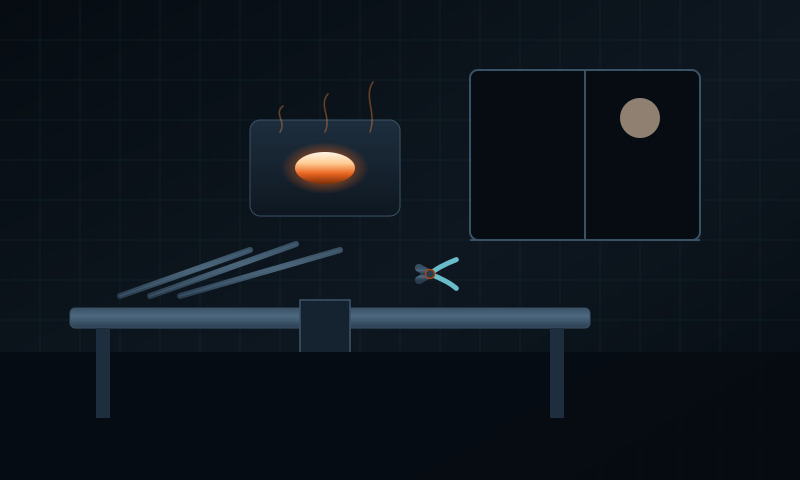
What you actually need before your first gather, what to learn in your first month, and the honest costs of setting up at home.
How a melting furnace actually holds temperature, why the crucible fails before the elements do, and the daily routine that doubles its life.
The gather sets up everything that follows. Here is how to take a clean one, keep it round, and inflate it without losing control.
The beginner guide covers what to learn first, what it genuinely costs, and the equipment decisions you can safely postpone.