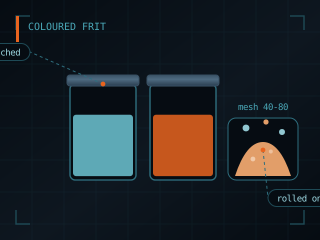
Colored Frit
Crushed coloured glass graded by mesh size, rolled onto a hot gather for speckled colour.
Coloring
Abrasive grit and carrier used to prepare or texture a glass surface before finishing.
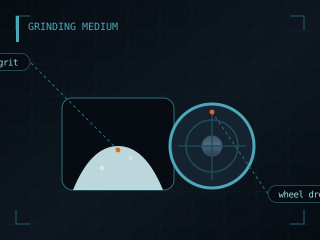
| Abrasive | Silicon carbide or aluminium oxide |
|---|---|
| Grit range | 60 coarse to 600 fine |
| Carrier | Water, recirculated with a settling tank |
| Application | Surface preparation and edge shaping |
Compatibility assumes the tool is rated for the working temperature of that glass family. Check the maker's documentation before use.
Grinding medium is the abrasive that does the actual cutting in coldworking. Silicon carbide grit in a water carrier is the workhorse: coarse grades remove material and shape an edge, fine grades prepare a surface for polishing. Water is not just a carrier, it is a coolant and a dust suppressant, and dry grinding is never acceptable.
Reference information only. Specifications are published ranges drawn from manufacturer documentation and normalised for comparison. They vary between makers and between individual units. This page does not sell or endorse any product, and does not guarantee any result. Follow the equipment manufacturer's instructions and take hands-on instruction before operating hot glass equipment.
Crushed coloured glass graded by mesh size, rolled onto a hot gather for speckled colour.

Finely milled coloured glass, sifted or dusted onto hot glass for soft gradients.
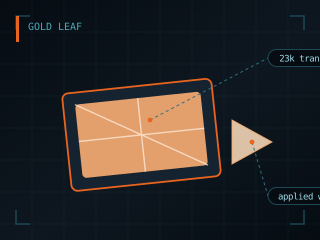
Transfer gold applied to hot glass, where it fuses into a metallic surface layer.
Read the category overview, or jump into the 3D Studio to see these tools applied to a live piece.