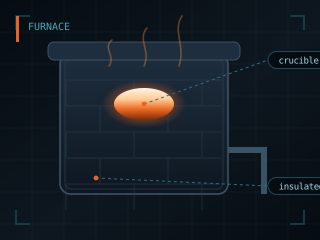
Glass Furnace
The melting tank that holds glass at working temperature, day and night, for the whole life of the studio.
Gathering
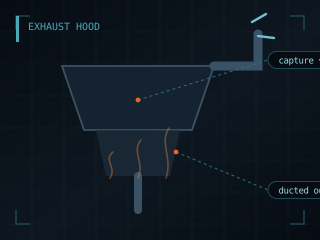
The capture canopy and duct that remove combustion gases and metal oxide fumes from the studio.
| Capture velocity | 0.5 - 0.8 m / s at the hood face |
|---|---|
| Duct diameter | 150 - 200 mm |
| Airflow | 600 - 1200 m³ / h |
| Material | Galvanised or stainless steel |
| Overhang | Minimum 300 mm beyond the furnace footprint |
Compatibility assumes the tool is rated for the working temperature of that glass family. Check the maker's documentation before use.
A hot shop produces carbon monoxide, nitrogen oxides and fine metal oxide particulate, and all of it rises. The exhaust hood is a shaped canopy that captures that plume before it reaches breathing height and ducts it outside. Capture velocity at the face of the hood is the number that matters: below roughly 0.5 m per second the plume escapes around the edges and the hood is decorative.
Reference information only. Specifications are published ranges drawn from manufacturer documentation and normalised for comparison. They vary between makers and between individual units. This page does not sell or endorse any product, and does not guarantee any result. Follow the equipment manufacturer's instructions and take hands-on instruction before operating hot glass equipment.
The melting tank that holds glass at working temperature, day and night, for the whole life of the studio.
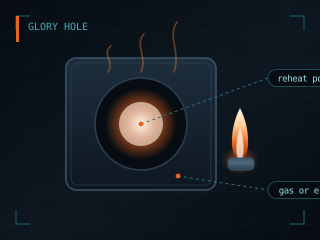
A reheating chamber that brings a cooling piece back to working temperature without touching the main furnace.
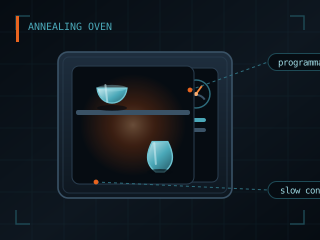
A front-loading chamber for bringing finished pieces down through the annealing range under control.
Read the category overview, or jump into the 3D Studio to see these tools applied to a live piece.