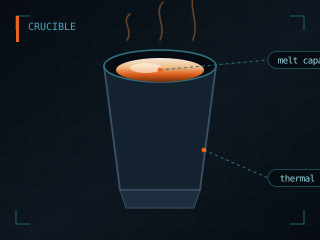
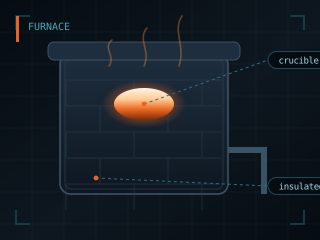
| Melt capacity | 20 - 250 kg |
|---|---|
| Maximum temperature | 1450 °C |
| Working temperature | 1100 - 1200 °C |
| Heating ramp rate | 2 - 5 °C / min |
| Controlled zones | 3 (crown, sidewall, base) |
| Supply | 380 V three phase, 12 - 45 kW |
| Expected crucible life | 8 - 12 months of daily use |
| Insulation | Alumina fibre board plus castable refractory |
Compatible glass types
Soda-lime
Borosilicate
Lead crystal
Compatibility assumes the tool is rated for the working temperature of that glass family. Check the maker's documentation before use.
Overview
A studio furnace is a refractory chamber wrapped in insulation, holding one or more crucibles of molten glass at a steady 1100-1200 °C. It is the single largest investment in a hot shop and the one piece of equipment that is expected to run continuously for months. Most small studios run a day tank: it is brought up to temperature in the morning and idled overnight, which saves a great deal of energy but puts the crucible through a thermal cycle every single day.
Safety notes
- The exterior shell still radiates enough heat to burn skin on contact even when the interior reads 1150 °C. Treat every surface as hot.
- Never open the gathering port and lean in. The radiant load at the port will scorch exposed skin in under a second and can ignite loose clothing.
- Molten glass at working temperature behaves like very thick honey and sticks to skin while it burns. It cannot be shaken off.
- Run extraction whenever the port is open. Furnace gases and metal oxide fumes are a respiratory hazard, not just a smell.
Using it well
Practical guidance
- Bring the furnace up to temperature slowly after any rebuild. A ramp faster than 3 °C per minute will crack a cold crucible.
- Keep a log of the standing temperature. A slow drift upward usually means the thermocouple is failing, not that the glass is hotter.
- Never add cold cullet to a nearly empty crucible. Pre-warm it on the furnace crown first.
- Check the exhaust hood airflow monthly. A partially blocked duct quietly turns the studio into an unsafe room.
What to look for
- Three independently controlled heating zones for even melt
- Front gathering port sized for a 25 mm blowpipe
- Removable crown for crucible changes
- K-type thermocouple per zone with an external readout
- Drip tray and glass catch below the gathering port
High temperature tool
This tool operates in or near the working range of molten glass. Read the safety notes above before first use, and never work with it without eye protection, heat-resistant gloves and working extraction.
Reference information only. Specifications are published ranges drawn from manufacturer documentation and normalised for comparison. They vary between makers and between individual units. This page does not sell or endorse any product, and does not guarantee any result. Follow the equipment manufacturer's instructions and take hands-on instruction before operating hot glass equipment.
Related
Tools used alongside the glass furnace
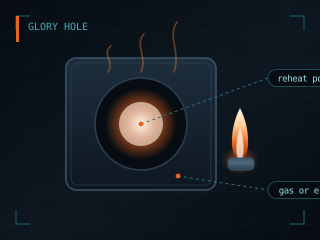
Glory Hole
A reheating chamber that brings a cooling piece back to working temperature without touching the main furnace.
Shaping / Blowing
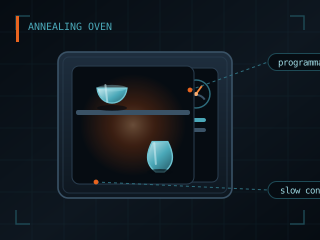
Annealing Oven
A front-loading chamber for bringing finished pieces down through the annealing range under control.
Annealing
Kiln Controller
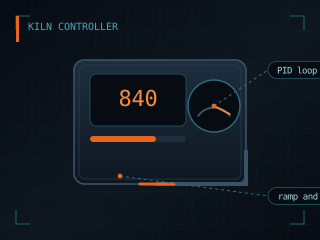
The programmer that executes a ramp-and-hold schedule and holds the furnace to it.
Annealing
See the furnace & heating workflow
Read the category overview, or jump into the 3D Studio to see these tools applied to a live piece.