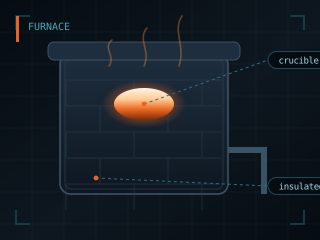
Glass Furnace
The melting tank that holds glass at working temperature, day and night, for the whole life of the studio.
Gathering
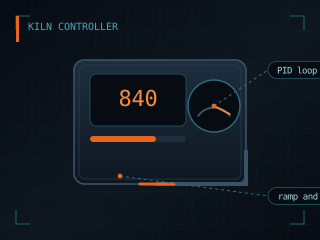
The programmer that executes a ramp-and-hold schedule and holds the furnace to it.
| Program segments | 8 - 30 |
|---|---|
| Ramp rate range | 0.1 - 20 °C / min |
| Soak duration | 0 - 99 hours per segment |
| Control loop | PID with autotune |
| Alarm outputs | 3 relay, high and deviation |
| Sensor type | Type K or Type S thermocouple |
Compatibility assumes the tool is rated for the working temperature of that glass family. Check the maker's documentation before use.
A kiln controller reads the thermocouple, compares it with the setpoint you programmed, and switches the elements to hold the curve. What separates a good controller from a cheap one is not the display but the loop: a well-tuned PID holds the annealing soak within a degree or two, which is exactly the margin that decides whether a thick piece survives.
Reference information only. Specifications are published ranges drawn from manufacturer documentation and normalised for comparison. They vary between makers and between individual units. This page does not sell or endorse any product, and does not guarantee any result. Follow the equipment manufacturer's instructions and take hands-on instruction before operating hot glass equipment.
The melting tank that holds glass at working temperature, day and night, for the whole life of the studio.
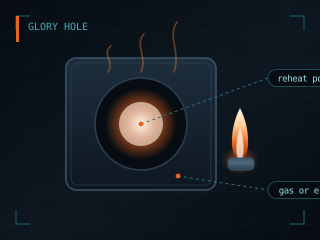
A reheating chamber that brings a cooling piece back to working temperature without touching the main furnace.
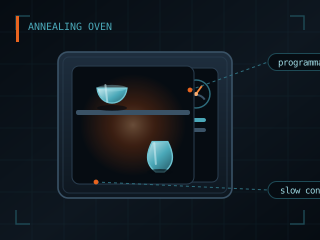
A front-loading chamber for bringing finished pieces down through the annealing range under control.
Read the category overview, or jump into the 3D Studio to see these tools applied to a live piece.