Everything in a blown piece traces back to the first twenty seconds. A gather that comes out uneven, bubbled or off-centre will fight you for the rest of the process, and no amount of later shaping fully hides it.
The gather
Gathering is a rotation and a dip. The pipe turns continuously as the tip enters the melt, and the glass that sticks to it is your gather. Three variables control the result: how deep you go, how long you stay, and how fast you rotate.
- Rotate fast enough that the gather wraps evenly rather than sagging to one side.
- Enter at a consistent angle. A pipe that goes in at an angle picks up an asymmetric gather.
- Come out with a slight upward lift, not a yank. Snapping the pipe out leaves a tail.
- Keep the gather centred. If it is off-axis, it will wobble when you rotate and every subsequent step inherits the error.
Beginners who count rotations out loud take noticeably more consistent gathers than those who do not. It sounds trivial and it works.
Keeping it round
Once the gather is out of the furnace it starts to cool and gravity starts to work. Constant rotation is the only thing keeping it spherical. Stop rotating and the gather sags into a pear shape within a couple of seconds, and that shape is then baked into the finished piece.
The most common beginner habit is pausing rotation while thinking about the next move. In a real shop, the pipe never stops.
Blowing the bubble
Air enters through the blowpipe and inflates the gather from the inside. The feel of the resistance tells you how hot and how thin the glass is. A gather that inflates with almost no resistance is too hot and will thin out somewhere you did not intend.
Seal the mouthpiece and check the swivel
A leaking swivel means you are blowing into the room. Confirm the coupling before you start.
Blow slowly and steadily
Steady cheek pressure inflates evenly. Short hard puffs create a lopsided bubble that is difficult to correct.
Stop early, then reheat
Inflate to just under your target, reheat, and finish. Glass that is inflated fully while cold thins unevenly.
Keep rotating throughout
The bubble centres itself as it inflates only if the pipe is turning.
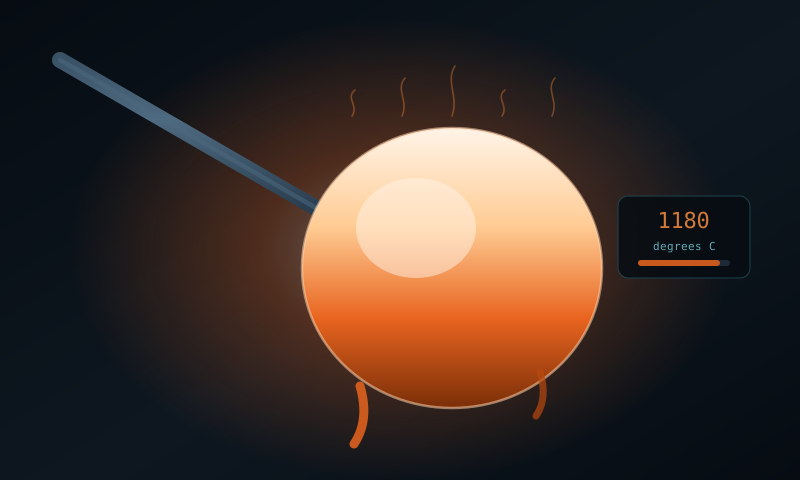
Reading temperature by eye
Experienced blowers judge temperature by colour, and the scale is surprisingly reliable once you learn it. A gather that is nearly white is too hot to shape; a deep orange is comfortable; a dull red is nearly too stiff to move and will crack if you force it.
| Colour | Rough temperature | Workable? |
|---|---|---|
| Near white, glowing | Above 1250 °C | Too fluid, will sag and thin |
| Bright orange | 1150 - 1250 °C | Ideal for gathering and blowing |
| Deep orange to red | 950 - 1150 °C | Good for shaping with tools |
| Dull red | 700 - 950 °C | Too stiff, reheat before touching |
Colour reading only works in dim light. Studio lighting that looks comfortable for working makes a cold gather look hot.
Gather and blow are the two skills everything else is built on. Get them consistent and the shaping steps become far more forgiving.
This article is educational reference material. Hot glass work involves severe burn, fume and fire hazards. Wear eye protection, heat-resistant gloves and natural-fibre clothing, ventilate every heat source to open air, fit a carbon monoxide alarm, and take hands-on instruction before operating any hot glass equipment.
No guarantee of results. Techniques, temperatures and schedules described here are reference guidance based on common studio practice. Glass behaviour depends on your materials, equipment and technique. Test everything on your own setup and follow the manufacturer's instructions.