There are only a handful of shaping tools in a hot shop, and each one does a specific job. Most shaping problems come from reaching for the wrong tool rather than from a lack of skill with the right one.
Jacks: the silhouette tool
Jacks are the tool that defines a vessel. Their curved jaws wrap around the glass and squeeze it inward as the pipe turns, which builds a neck, defines a shoulder or opens a lip. Because they also chill the surface they touch, jacks stiffen the area they work, which is what makes a narrow neck possible on a soft piece.
- Neck in several light passes with a reheat between them. One heavy squeeze collapses the wall.
- Wet the jaws slightly so they glide rather than grab.
- To open a lip, angle the jaws outward and let the rotation do the work.
Pliers: pulling and stretching
Pliers grip and pull. They are the tool for drawing a section of glass outward: stretching a neck, forming a handle, pulling a foot. The serrated jaw bites enough to hold without slipping, and the marks it leaves are usually removed by a later heating pass.
The mistake is pulling with the arm. Grip, then rotate the pipe and let the glass draw itself out. Hauling with the tool thins the wall unevenly and leaves a visible distortion.
Paddles: flat faces and blocking
A paddle is a flat plate that flattens a base, squares a shoulder or blocks a soft gather into a cylinder. Graphite glides on hot glass without marking it; cherry wood chills the surface harder and is better when you want to stiffen a form quickly.
Flatten a base with a single square press and remove the paddle. Repeated presses leave facets that have to be melted out later.
Tweezers and shears
Tweezers handle detail: pinching a lip, placing a small bit of colour, pulling a fine thread. Shears cut. Both are used at the end of a shaping sequence, and both punish hesitation. A slow shear cut crushes the wall; a hesitant tweezer pull leaves a lump.
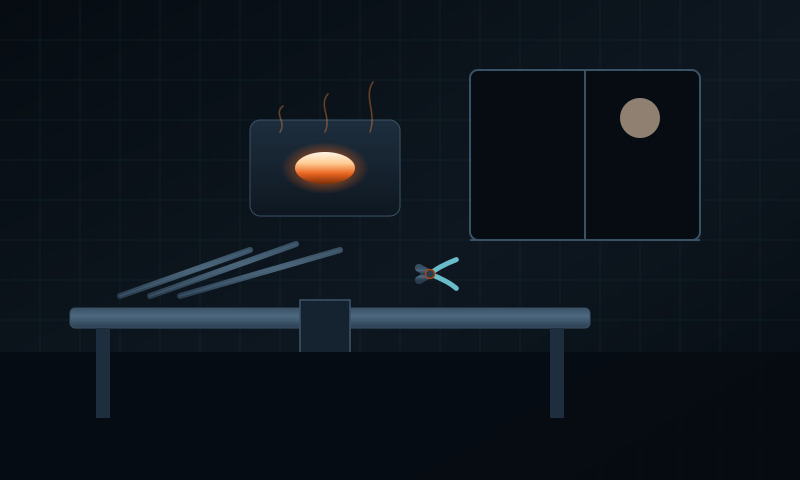
The five mistakes that cost a piece
Working too cold
Cold glass cracks at the tool line instead of moving. If the surface is dull red, reheat before touching it.
Working too hot
Very hot glass sags away from the tool and thins unpredictably. Wait for bright orange before shaping.
Squeezing instead of shaping
Tools shape by contact and chill, not by force. Pressure beyond the minimum collapses the wall.
Stopping the rotation
Any pause lets the form sag and go off-axis, and the error compounds through every later step.
Skipping the reheat
Most shaping sequences need two or three passes through the glory hole. One long cold pass is not faster.
A cold tool chills the glass at the contact point and can start a crack. Warm the jaws on a piece of hot cullet before the first use of a session.
Shaping is where a piece stops being a gather and starts being an object. The tools are simple; the judgement about when to use them is what takes practice.
This article is educational reference material. Hot glass work involves severe burn, fume and fire hazards. Wear eye protection, heat-resistant gloves and natural-fibre clothing, ventilate every heat source to open air, fit a carbon monoxide alarm, and take hands-on instruction before operating any hot glass equipment.
No guarantee of results. Techniques, temperatures and schedules described here are reference guidance based on common studio practice. Glass behaviour depends on your materials, equipment and technique. Test everything on your own setup and follow the manufacturer's instructions.